Anse
ANSE Journal
The online ANSE Journal of Supervision and Coaching.
One of the major objectives of ANSE is to promote and, wherever possible, facilitate cross border contacts. Actually, it is our core business, because, quite like in supervision or coaching, communication is the alpha and omega of the ANSE community. It is, so to speak, our natural habitat.
#formulier#
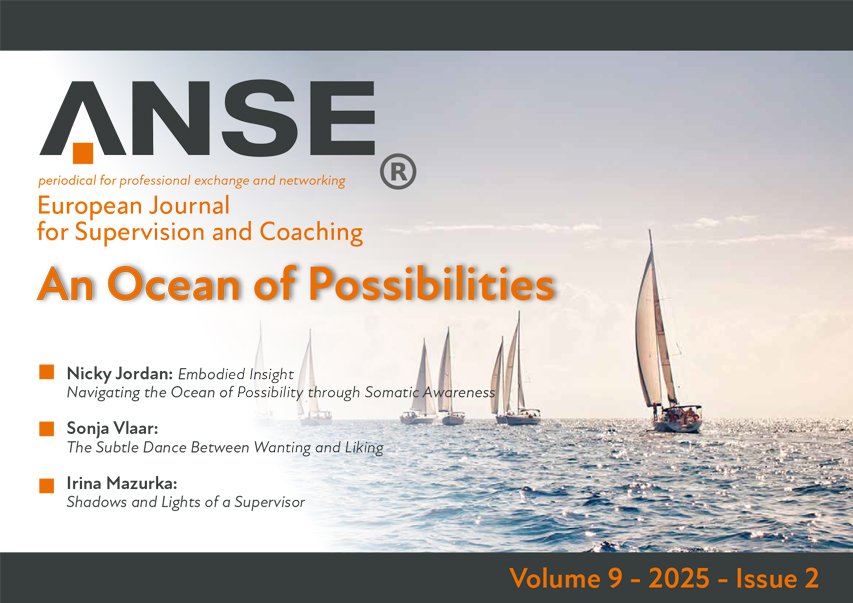 |
Volume 9: Issue 2; June 2025 ■ Kristina Urbanc We are now in the new issue of ANSE Journal 9-2, dedicated to the Summer University held from August 18th to the 22nd in Munich. In line with the good tradition of the ANSE Journal, in this issue we have also tried to bring the richness and diversity of supervision practice and science closer to our readers in the form of articles, reflections and vignettes and to convey at least some of the dynamics and content that we had the opportunity to experience in Munich this August. |
|
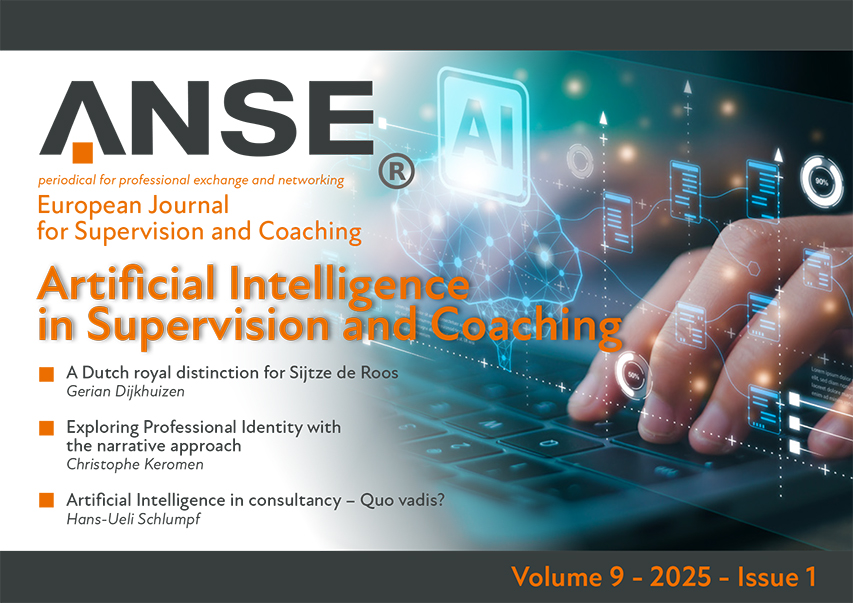 |
Volume 9: Issue 1; June 2025 ■ Kristina Urbanc As Sijtze de Roos announced in the last issue of Anse Journal, I took over the role of chief editor from him in January 2025. The preparation of this issue began during his term, and this has been a transitional period for me and the members of the editorial board, in which we have, I hope, strived to preserve the mission, standards and ethics of Sijtze’s legacy. |
|
|
|
Volume 8: Issue 2; December 2024 ■ Sijtze de Roos Since time immemorial, people tell themselves and each other stories; orally, in writing or via radio, TV and social media. We’re sharing tales and stories about who we are or what we strive to be, about our manifold roots or what we retrospectively would prefer those to have been, about our role, function and purpose on this earth, about how we try to understand the nature of existence, or about how to cope with the ominous silence of the universe. Nothing, it seems, hurts us more than indifferent silence, than not having listeners, than not being spoken to |
|
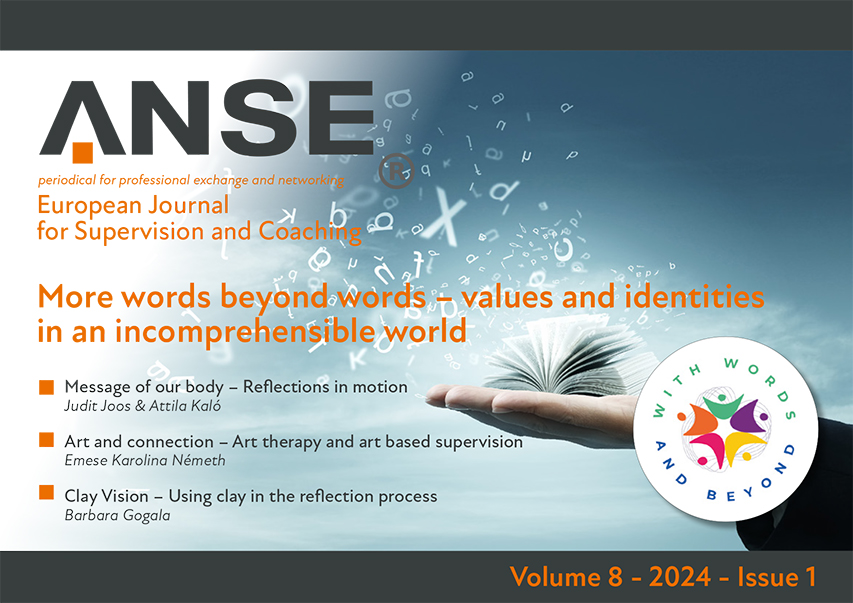 |
Volume 8: Issue 1; June 2024 ■ Sijtze de Roos Before I go on introducing the content of this issue, I may have to introduce myself again. You may wonder what I am – seemingly all of a sudden – doing on this page, reserved for your usual chief editor Agnes Turner. The reason is this: because of her increased academic responsibilities, Agnes could no longer responsibly combine her professorial duties with the editorial chairmanship of this magazine. We regret letting her go, but not before thanking her for the two successful issues that appeared under her leadership. We wish her all the best for the future and we are sure we will meet her again in the ANSE community, or perhaps as author. And so it was that the ANSE board asked me to temporarily take over the position of chief editor. |
|
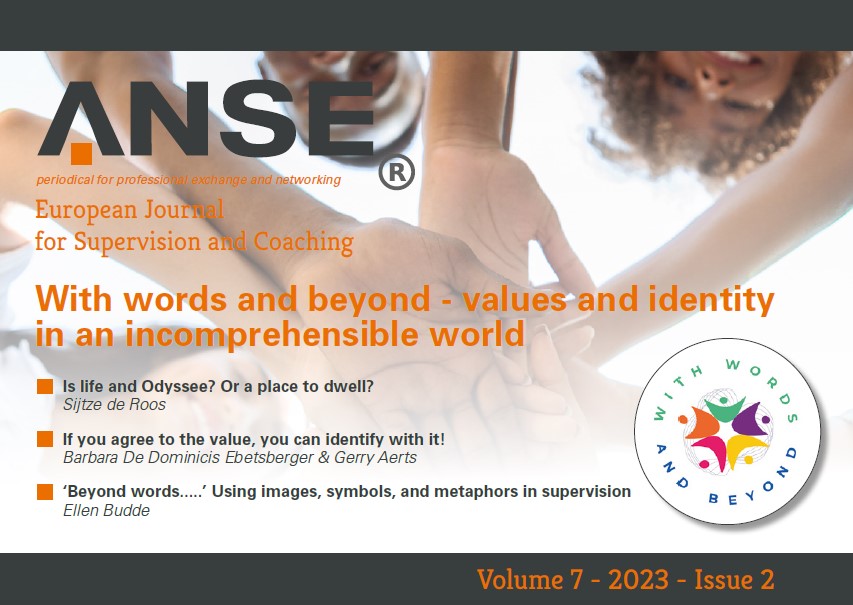 |
Volume 7: Issue 2; December 2023 ■ Agnes Turner In the midst of our ever-evolving world, characterized by perpetual change and chaotic conditions, the recent |
|
.jpg) |
Volume 7: Issue 1; June 2023 ■ Agnes Turner Learning from mistakes and failure is an essential part of personal growth and development. It is often said that we learn more from our failures than from our successes because mistakes provide us with valuable feedback and insights that we can use to improve our future performance. Professional failures can be unpleasant and demotivating, but they are also an important opportunity for personal and professional growth... |
|
.jpg) |
Volume 6: Issue 2; December 2022 ■ Sijtze de Roos You probably haven’t missed it, but when still in doubt you might remember this happy fact from our previous issue: ANSE is 25 years young this year. We joyfully celebrated this in different ways, such as in Riga, during the ably organized ANSE Summer University of 2022. |
|
.jpg) |
Volume 6: Issue 1; June 2022 ■ Sijtze de Roos |
|
 |
Volume 5: Issue 2; December 2021 ■ Sijtze de Roos |
|
 |
Volume 5: Issue 1; June 2021 ■ Sijtze de Roos |
|
.png) |
Volume 4: Isseu 2; December 2020 ■ Sijtze de Roos |
|
.jpg) |
Volume 4: Isseu 1; June 2020 ■ Agnes Turner & Reijer Jan van ’t Hul |
|
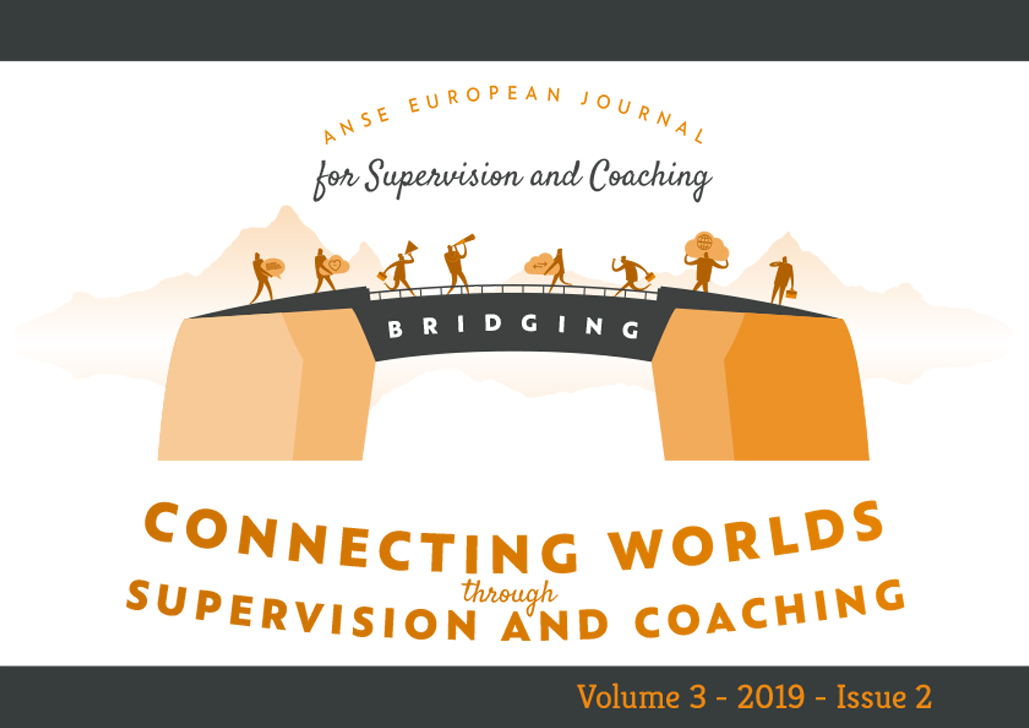 |
Volume 3: Issue 2; December 2019 ■ Agnes Turner & Reijer Jan van ’t Hul |
|
.jpg) |
Volume 3: Issue 1; July 2019 ■ Agnes Turner & Reijer Jan van ’t Hul |
|
 |
Volume 2: Issue 1; October 2018 ■ Barbara Baumann |
|
 |
Volume 1: Issue 1; November 2017 ■ Sijtze de Roos |
The online ANSE Journal of Supervision and Coaching: Introduction to the pilot
2017: Volume 1: Isseu 1 One of the major objectives of ANSE is to promote and, wherever possible, facilitate cross border contacts. Actually, it is our core business, because, quite like in supervision or coaching, communication is the alpha and omega of the ANSE community. It is, so to speak, our natural habitat. ■ Sijtze de Roos Central to our mission is – to quote from our Policy Plan – ‘the cross border exchange of information on professional developments between our National Organisations, training institutes and sister organisations, as well as the cross border exchange of professional knowledge and experience between practitioners.’ Obviously, communication and exchange are prerequisite to freely share information on supervision, coaching and consultancy, and – not to forget – to the (further) development and implementation of (European) quality standards. There is so much to share! In all our countries, there is a wealth of experience and theoretical reflection. But most of it never crosses the borders of the country - or at best the language area - of its origin. For sure, live experience may be exchanged in ANSE International Intervision Groups, during conferences and at Summer Universities. True; ‘ANSE English’ in the meantime serves as our lingua franca during our live meetings. But theories, books, articles, master theses or scientific research findings are quite another matter. We still have to overcome a big language gap on paper or smart screen. Too much of this richness is inaccessible to too many of our colleagues. Latvian colleagues, for example, have no access to studies published in Hungary and the other way round, and German supervision scholars hardly ever see, let alone understand, Dutch publications and vice versa. This unfortunate state of reciprocal linguistic exclusion goes all the way from Romania to Finland. But it does not need to be like that. And that is exactly why we hereby launch the first issue of the ANSE Journal, which I am happy to present to you on behalf of the ANSE Board. This one is a pilot, but there surely will follow more. We are planning to publish two issues each year. I am very grateful for the work that board member Barbara Baumann over the last two years put into this, to Eric Vullers of Kloosterhof Publications who made it all possible, and of course to the authors and national editors. Let’s go on this way, and make our often hidden wealth accessible to all of us. ■
Gratis